-
What Flagpole Installation and Repair Actually Covers
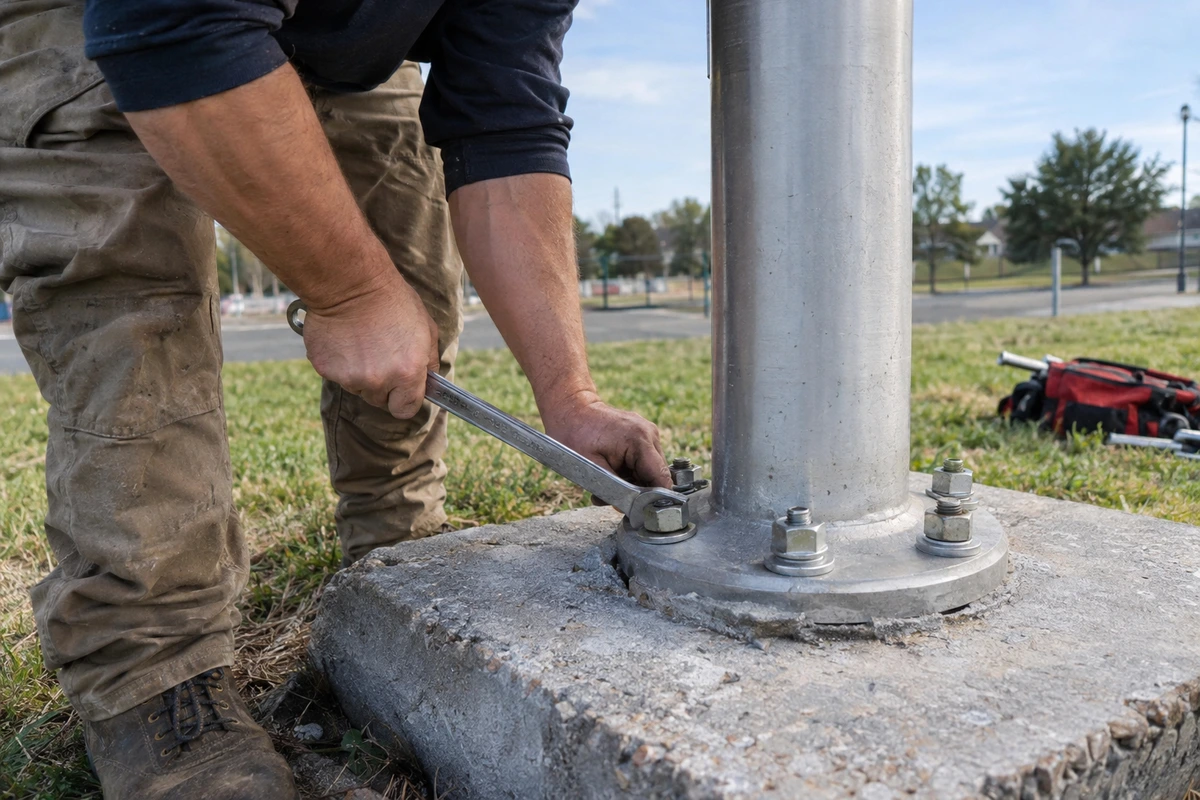
A flagpole is a tapered aluminum, fiberglass or steel shaft set in the ground and topped by a truck, the cap assembly that holds a pulley, with a halyard rope running over it to raise and lower the flag. Flagpole installation and repair covers two things: setting that shaft in a concrete footing deep enough to resist wind, and fixing the parts that wear out, such as halyards that fray, trucks that seize, cleats that crack and poles that lean. Most failures start at the base. A pole cast straight into concrete traps water at the groundline and corrodes there. Wind load is the other common cause, since a pole flying an oversized flag gets pushed past what it can carry. A proper job includes a removable ground sleeve, a footing sized to the pole's height, and hardware matched to the flag. Restringing a rope on a pole that already leans fixes none of that.
-
When Flagpole Installation and Repair Makes Sense
A slight lean is the trigger people most often brush off. They usually blame their eyes or a windy week, when it actually means the footing or wedges have shifted. Lean and groundline corrosion get worse quickly, because each storm works the pole looser in its base. Halyard and pulley trouble is easier to spot and simpler to fix.
- Pole visibly leaning or rocking at the base in wind
- White powdery corrosion or pitting where the pole meets the ground
- Halyard frayed, faded or wrapped around the pole
- Pulley at the top squealing, sticking or refusing to turn
- Flag tearing on the snaps or catching on the truck
- New home, school or business with no pole yet
-
Our Flagpole Installation and Repair Process
The ground at the chosen spot gets checked for buried utilities, irrigation lines and rock before any digging, with a utility locate requested a few days ahead. A post-hole auger then bores the footing, typically 18 to 24 inches across and deep enough to bury roughly a tenth of the pole's length, with a few inches of gravel at the bottom for drainage. The ground sleeve sits on that gravel. It is plumbed with a level and braced while concrete goes in around it, and the concrete is crowned at the top so water sheds away. Once the concrete has cured, usually after a few days, we lift the pole into the sleeve, by hand for short poles and with a gin pole or boom truck for tall ones. Wedges at the top of the sleeve hold the pole plumb while dry sand fills the gap. The wedges then come out and a rubber cap seals the joint. Last, the flash collar slides down over the base, the halyard gets threaded and tied off, and we run a flag up and down to confirm the snaps clear the pulley.
-
Equipment and Materials Used in Flagpole Installation and Repair
Tapered aluminum in a satin or anodized finish is the standard shaft because it carries wind load at a fraction of steel's weight and won't rust. Fiberglass gets chosen in salt spray, where even aluminum pits over time. A steel or PVC ground sleeve is used instead of pouring concrete straight against the pole, so the pole can be lifted out later and the base can drain. Dry sand fills the sleeve gap instead of grout because it holds the pole firmly yet can be vacuumed out. Braided polyester halyard replaces twisted rope since it stretches less and holds up to UV. Internal halyard systems, which run the rope inside the pole behind a locking access door, suit schools and businesses where rope gets cut or tampered with. A copper-clad ground rod bonded to the base gives lightning a path into the soil.
-
Can You Do Flagpole Installation and Repair Yourself?
The rope-and-hardware side of the job is homeowner work; the setting and lifting side is not. Swapping snap hooks, tightening a cleat or replacing a frayed halyard on an external pole is manageable when the pole is about 20 feet or shorter and a helper can lower it or steady a ladder. Above roughly 25 feet, a pole is too heavy and flexible for a few people to walk up safely. A pole dropped near overhead power lines can be fatal. Sizing a footing for wind, re-reeving a halyard through a seized truck at the top, and replacing an internal halyard are pro work. Any lighting wired to the pole belongs to a licensed electrician, and in many areas a tall pole needs a permit.
-
What Makes a Flagpole Installation and Repair Job Bigger
Pole height sets nearly everything else, since a taller shaft needs a deeper, wider footing, heavier lifting gear and a thicker wall. A walk-around rarely shows corrosion hidden inside the sleeve, or old concrete that was poured directly against the pole and has to be broken out.
- Pole height and wall thickness for the planned flag size
- Rock, roots or a high water table in the hole
- Old footing that must be jackhammered out before resetting
- Boom truck access across lawns, fences or tight lots
- Internal halyard system instead of an external rope
- Overhead power lines or trees near the lift path
-
How Long Does Flagpole Installation and Repair Take and Last?
A typical flagpole installation and repair job runs usually two to six hours on site, with a new residential pole set across two visits so the concrete can cure in between. Simple restringing often takes under an hour. Commercial poles over 30 feet, rocky digging, breaking out an old footing and a boom truck that can't reach the spot stretch it to a full day or more. A well-set aluminum pole typically lasts 25 years or longer. A halyard usually needs replacing every two to five years, and truck pulleys every several years, depending on how often the flag goes up and how much sun and wind the pole takes.
-
What Comes After Flagpole Installation and Repair
Electrical work most often comes next, since owners who fly the flag overnight want it lit and many add a wired uplight after the pole goes up. Landscaping around the new base usually follows too, along with routine hardware care.
- Have a licensed electrician wire an uplight or ground-mounted spotlight
- Inspect the halyard and snaps for fraying every spring and fall
- Retighten the cleat and flash collar after big storms
- Replace a worn flag before loose threads tangle in the pulley
- Bring in a landscaper to edge and mulch around the base
-
How Much Does Flagpole Installation and Repair Cost in Annapolis, MD?
Flagpole installation and repair in Annapolis, MD typically runs from $310 to $4,196. Restringing a halyard or swapping a pulley sits near the low end, while setting a new residential pole in a sleeved concrete footing lands toward the top. Height drives most of the cost: a taller shaft needs a deeper footing and a thicker wall, and it often takes a boom truck to lift into place. Rock in the hole, an old footing that has to be jackhammered out, or an internal halyard system will all push the price higher.
 Baltimore Flagpole Experts
Flagpole Installation and Repair Services in Annapolis, MD
Flagpole Installation and Repair Estimates
Baltimore Flagpole Experts provides flagpole installation and repair for homes and businesses across Baltimore. We install wall-mounted poles for porches, nautical yardarm and fiberglass poles for yards, and commercial poles with internal halyards for office buildings. Our repair work covers missing finials, frayed halyards, worn pulleys, faded finishes and leaning poles, and we also handle routine upkeep and the removal or relocation of old flagpoles. Contact us for a free quote today.